
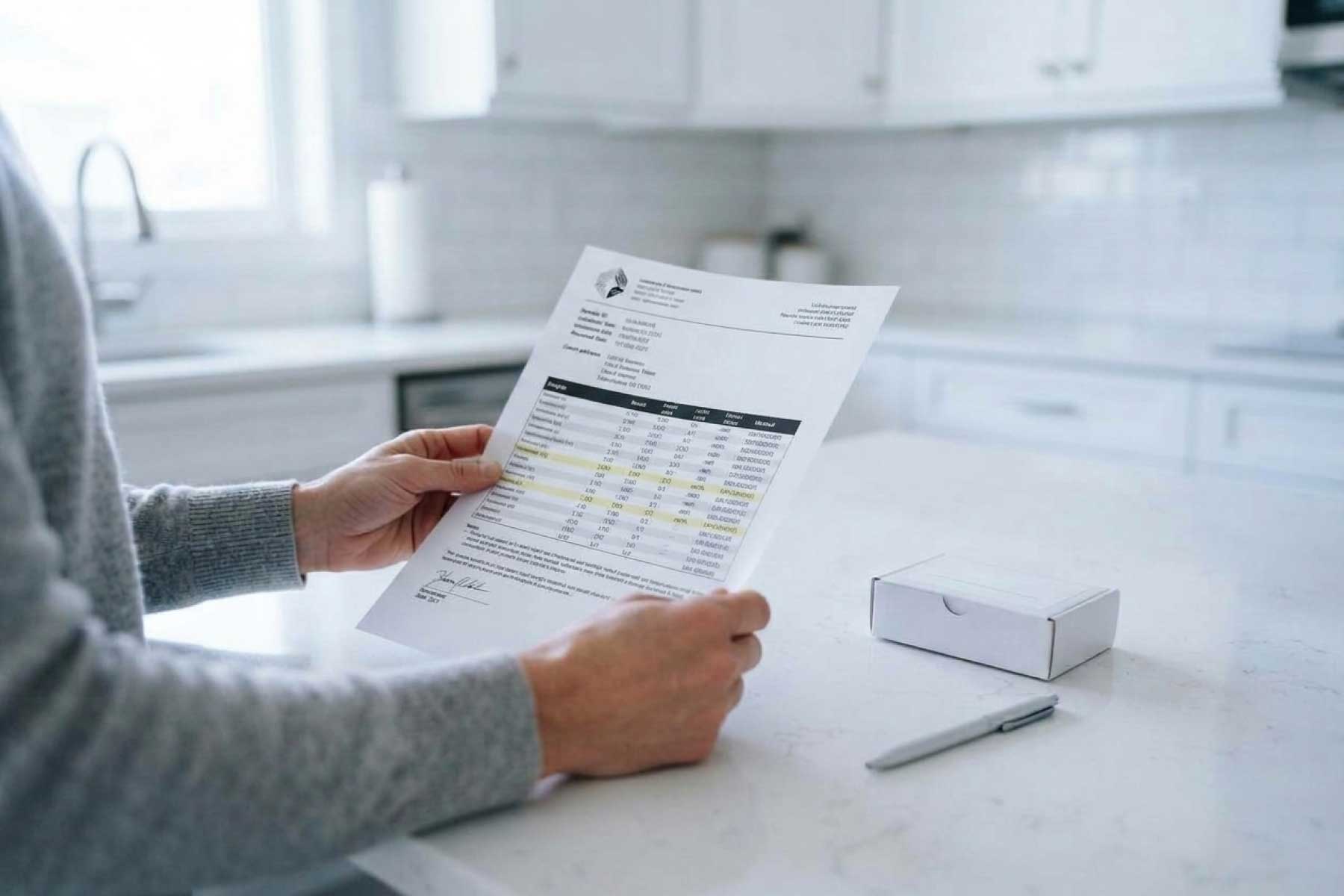

A PFAS water test report usually arrives as a page of chemical abbreviations, numbers in parts per trillion and a column of detection limits. PFOA, PFOS, PFHxS, GenX. Homeowners often order testing after a news story about forever chemicals in water, hoping for a clear answer, and end up with a document that raises more questions than it settles. A report that sits in a drawer protects no one. This guide walks through how to read PFAS test results, how they compare to federal standards, and which next steps fit each outcome.
How to Test Drinking Water for PFAS
Ordering a water test? PFAS screening has to be requested by name, because standard water quality panels don’t include it. A reliable PFAS water test uses a certified laboratory and EPA-approved methods such as Method 533 or 537.1, which measure individual compounds at very low concentrations. Sampling matters too. PFAS are present in many everyday materials, so labs provide specific bottles and instructions to keep outside PFAS contamination from skewing the results.
PFAS in Municipal Water vs. PFAS in Private Wells
For homes on city water, the utility’s annual water quality report is a good starting point. Larger public systems have tested for PFAS in drinking water under EPA monitoring programs, but those results reflect water leaving the treatment plant, which can differ from what reaches a specific kitchen tap.
PFAS in private wells is a different situation. Federal drinking water standards have never applied to private wells, so no agency is sampling that water. Wells near farmland, landfills, airports, military sites or areas with industrial PFAS contamination carry higher risk, and a water test for PFAS is the only way a well owner will know what is coming out of the ground.
How to Read PFAS Water Test Results
Most PFAS testing reports list each compound separately, with results in parts per trillion (ppt), which is the same as nanograms per liter (ng/L). A few terms appear on nearly every report:
- ND (non-detect): The compound was not found at or above the lab’s reporting limit.
- Reporting limit (MRL): The lowest concentration the lab can reliably measure. A non-detect means the compound fell below this level, which is different from proving it is absent.
- Total PFAS: Some labs add individual results together to show overall exposure.
Start with PFOA and PFOS, since those two compounds have enforceable federal limits. Results for other compounds still matter, especially when several appear together. For background on where these chemicals come from, see our overview of PFAS in your drinking water.
EPA PFAS Drinking Water Standards and What They Mean
In April 2024, the EPA finalized the first enforceable PFAS drinking water standards. The limits were 4 ppt each for PFOA and PFOS, and 10 ppt each for PFHxS, PFNA and HFPO-DA (GenX), plus a combined limit for certain PFAS mixtures. Public water systems had until 2029 to comply. In May 2026, the EPA proposed keeping the PFOA and PFOS limits while rescinding the other standards and allowing qualifying systems to apply for an extension to 2031. Our post on forever chemicals in drinking water covers that rollback in more detail.
These PFAS drinking water standards apply to public utilities, not private wells. Still, they give every household a useful benchmark for reading its own results.
Are There Safe PFAS Levels in Water?
Alongside each enforceable limit, the EPA sets a health-based goal. For PFOA and PFOS, that goal is zero, meaning the agency did not identify any level of exposure free of potential health risk. The 4 ppt limit sits at the lowest level labs can reliably measure, so it works as a regulatory floor more than a safety line. That is why many households act on any detectable PFAS levels in drinking water, particularly homes with pregnant women or young children, who are more vulnerable to exposure.
Your Next Steps After PFAS Testing
 No PFAS Detected
 No PFAS Detected
A non-detect is good news, but it reflects one sample on one day. City water customers can keep an eye on their utility’s annual report, and well owners should plan to retest periodically, especially if land use nearby changes.
PFAS Detected Below EPA Limits
Low-level detections won’t trigger action from regulators, but they confirm PFAS contamination is reaching the home. A point-of-use system at the kitchen sink is a practical first step for drinking and cooking water.
PFAS Above EPA Limits
Results above 4 ppt for PFOA or PFOS call for prompt action. Use an alternative water source for drinking, cooking and brushing teeth until treatment is in place, then plan a long-term filtration system sized to the home’s water use.
How to Remove PFAS From Water at Home
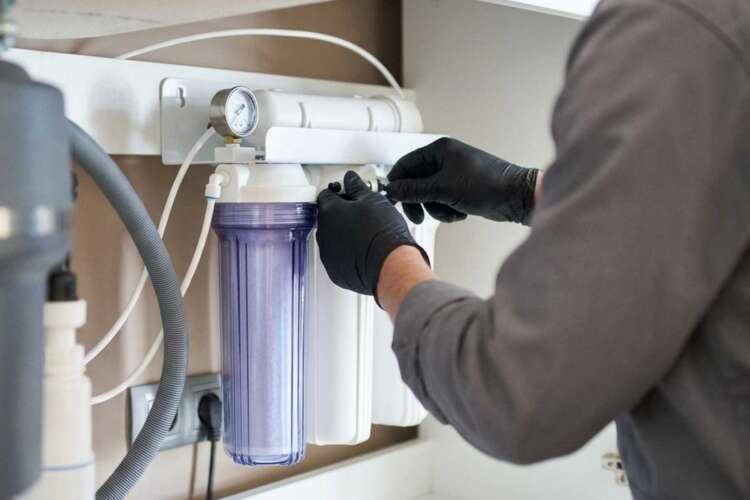
Boiling won’t help, since heating evaporates the water and can leave PFAS more concentrated. When it comes to how to remove PFAS from water, two technologies have the strongest track record.
Activated carbon traps PFAS as water passes through the media. A whole-house carbon filtration system treats every faucet in the home, and the right carbon filter to remove PFAS also reduces chlorine taste and odor.
Reverse osmosis forces water through a semipermeable membrane that blocks a wide range of PFAS compounds. An under-sink RO filtration system is one of the best-documented answers to how to remove PFAS from drinking water, and a reverse osmosis filter to remove PFAS pairs well with whole-house carbon for full coverage.
The right home water filter for PFAS removal depends on test results, water source and household size, and our guide to filters that can remove forever chemicals compares the options side by side. After installation, a follow-up PFAS water test confirms the water filtration is doing its job.
Turn Your PFAS Water Test Into a Plan
Test results only help when they lead to a decision. Metro Water Filter of the South has helped Georgia homes and businesses with water treatment since 1972, and our team can handle PFAS water testing, explain each number in plain terms and recommend a system matched to what the report shows. Under the current EPA proposal, some public systems could have until 2031 to meet federal limits, which means years of exposure for households waiting on an upgrade. Reach out to a water filtration expert for free water testing and schedule your free water consultation.