
When you turn on the tap, you expect your water to be clean and safe. But even clear water can hide harmful microorganisms.
That’s why more homeowners are turning to ultraviolet water filtration, a proven method that disinfects water without using chemicals. It may sound high-tech, but the science behind it is straightforward: ultraviolet light disrupts the DNA of bacteria and viruses, rendering them harmless.
In this article, we’ll explore how a UV water filtration system works, what sets it apart from other methods, and why it’s one of the safest and most effective ways to protect your family’s drinking water.
What Is UV Water Filtration?
UV water filtration is a water disinfection system, not a true filter. Instead of trapping particles, an ultraviolet water filter uses UV-C light to neutralize bacteria, viruses, and parasites as water flows past the lamp.
Homeowners often ask about the difference between a UV water filter and other systems. A UV filter doesn’t physically remove sediment or chemicals; instead, it’s a UV disinfection water treatment that sterilizes bacteria, viruses, and parasites. That makes it an ideal partner to other filtration systems that remove particles or improve taste.
Its biggest advantages are chemical-free disinfection, low operating costs, and whole-house protection from a single system. For the full picture, see our breakdown of the pros and cons of UV water filters.
How Does UV Water Purification Work?
The science of UV water treatment is simple but powerful.
UV-C Light and Microbial DNA
UV water purification uses a lamp that emits UV-C light. That light penetrates microorganisms like E. coli, Salmonella, and Hepatitis and damages their DNA so they can no longer reproduce, leaving no residues or byproducts behind.
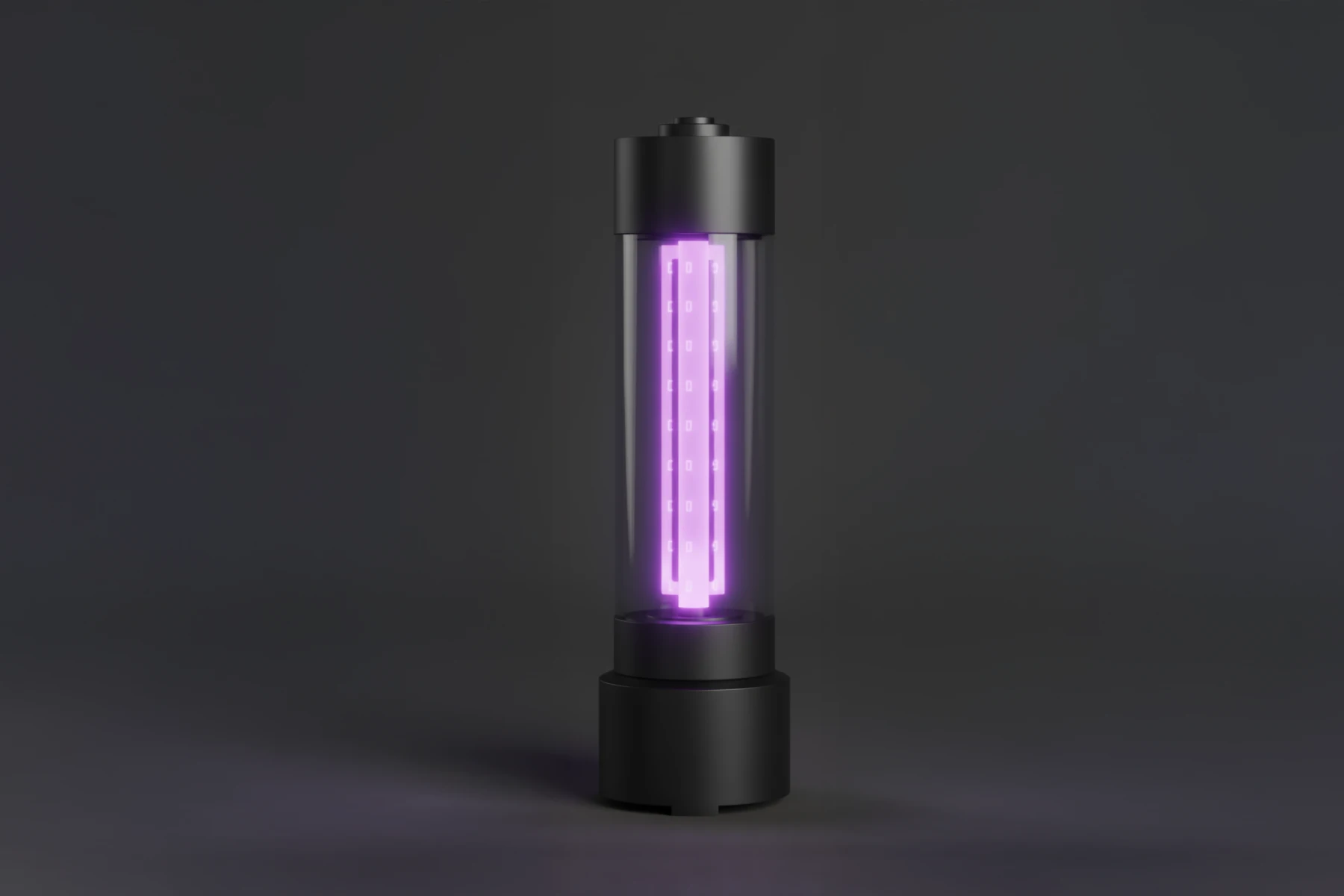
As water flows into a stainless steel chamber, it’s exposed to a high-intensity UV lamp. This process, known as UV light for water treatment, disinfects the entire stream in real time.
Because it’s chemical-free, a UV water treatment system doesn’t change the taste, smell, or color of your water. It also doesn’t require warm-up time, which makes it far more convenient than boiling. In fact, both the EPA and FDA recognize ultraviolet disinfection as an effective way to safeguard drinking water.
What Is Inside a UV Water Treatment System
Every UV water treatment system is built around three parts: the UV lamp that produces the light, a quartz sleeve that protects the lamp while letting light through, and the stainless steel chamber that holds the water as it flows past. Metro Water Filter offers the Biolyte UV purifier, a chemical-free UV water filter system that delivers long-lasting protection for both residential and commercial use.
The lamp needs replacing about every 12 months, and the quartz sleeve should be cleaned every three to six months so light can reach the water. Our guide to UV water filter maintenance walks through both.
UV Dose and Flow Rate: Why Sizing Matters
UV dose is the amount of UV energy delivered to the water, measured in millijoules per square centimeter (mJ/cm²). Dose depends on flow rate: the faster water moves through the chamber, the less exposure each microorganism gets, so a system that’s undersized for a household’s flow delivers a weaker dose.
The NSF/ANSI 55 standard sorts UV systems into two classes. Class A systems deliver at least 40 mJ/cm² and are designed to disinfect contaminated water, including Giardia and Cryptosporidium along with bacteria and viruses. Class B systems deliver 16 mJ/cm² and are meant only as supplemental treatment for drinking water a local health agency has already deemed acceptable.
What Can UV Light Kill in Water?
The list of microorganisms neutralized by a UV water filter is extensive. It can help protect against:
- E. coli
- Salmonella
- Hepatitis virus
- Cholera bacteria
- Streptococcus and Staphylococcus
- Giardia and Cryptosporidium
Giardia and Cryptosporidium are where dose matters most: Class A systems are designed to handle both, while Class B systems aren’t rated for them.
These are the contaminants most likely to cause gastrointestinal illness, headaches, or worse. For homeowners dealing with recurring boil water advisories, a UV treatment system provides peace of mind by keeping water safe at the tap.
If you’ve ever wondered about other ways to filter bacteria, options like chlorination or reverse osmosis exist, but UV remains one of the simplest and most dependable solutions.
What UV Water Treatment Does Not Do
UV light does not remove sediment, heavy metals, or chemical contaminants. It does not reduce chlorine either. It also leaves no residual disinfectant in the water, so it only protects water at the moment it passes through the chamber.
For households that want a complete solution, UV is often combined with a home water filtration system that handles sediment or chlorine, giving you both purity and protection. For a closer look at when UV needs backup, read is UV water treatment enough.
Talk to a UV Water Treatment Specialist
The right UV setup starts with knowing what’s in your water and how much of it your household uses. Schedule your free water test today and speak with our experts about how a UV system can fit into your home. Browse our UV water filter systems or contact our team of water filter experts to get started.
UV Water Treatment FAQs
How does UV water purification work?
Water flows through a stainless steel chamber past a lamp that emits UV-C light. The light damages the DNA of bacteria, viruses, and parasites so they can’t reproduce, all in real time with no chemicals added.
How fast does UV light kill bacteria in water?
Instantly. Microorganisms are neutralized as water passes through the chamber, with no warm-up or waiting period like boiling requires.
Is ultraviolet sterilization safe for drinking water?
Yes. The EPA and FDA both recognize UV as an effective way to disinfect drinking water, and it leaves no residues, byproducts, or chemical taste.
Is a UV water sterilizer the same as a UV water filter?
Yes, they’re two names for the same system. Both disinfect water with UV-C light rather than straining anything out, which is why they’re often paired with a sediment or carbon filter.