


You turn on the tap, and instead of clean water, you get a whiff that smells like sulfur or spoiled eggs. If you have found yourself asking why does my water smell like rotten eggs, you are dealing with one of the most common water quality complaints among Georgia homeowners, whether you are on a private well or connected to city water. The good news is that a rotten egg smell in water almost always has a clear cause, and in most cases, a straightforward fix.
What Causes Rotten Egg Smell in Water?
The rotten egg odor comes from hydrogen sulfide gas, a byproduct of naturally occurring sulfur bacteria that live in soil, groundwater, and even inside your plumbing. When these bacteria break down sulfur compounds, they release hydrogen sulfide, which is what causes rotten egg smell in water in the first place.
Hydrogen sulfide can enter your water at the source, such as a well drawing from sulfur rich rock, or it can develop after the fact, inside a water heater or along a section of plumbing where bacteria have had time to establish themselves. Where the smell is strongest, and when it shows up, both offer useful clues about the actual cause.
Why Does My Hot Water Smell Like Rotten Eggs but Not My Cold Water?
This is one of the most common versions of the complaint, and it almost always points to the water heater rather than your water source. Hot water rotten egg smell typically happens when the magnesium anode rod inside your tank reacts with sulfate reducing bacteria, producing hydrogen sulfide gas that only shows up when water is heated.
If you are noticing rotten egg smell in hot water but your cold taps run clean, replacing or adjusting the anode rod, or having the tank flushed and disinfected, often resolves the issue without needing to treat your whole water supply. That said, if you are also asking why does my cold water smell like rotten eggs, the cause is more likely coming from your source water itself, not just the tank, and calls for a different approach.
Why Does My Well Water Smell Like Rotten Eggs?
Rotten egg smell in well water is extremely common in Georgia because groundwater often picks up sulfur compounds as it moves through soil and rock. Well water rotten egg smell can also be a sign that sulfur bacteria have colonized the well casing or plumbing itself, which tends to make the odor stronger and more persistent over time.
Sulfur and iron frequently show up together in Georgia wells, so if you are dealing with both staining and odor, a system designed for an iron filter for well water is often part of the answer. Since these two contaminants respond well to similar oxidation based treatment, an iron filtration system can frequently address both issues in a single setup.
Why Does My City Water Smell Like Rotten Eggs?
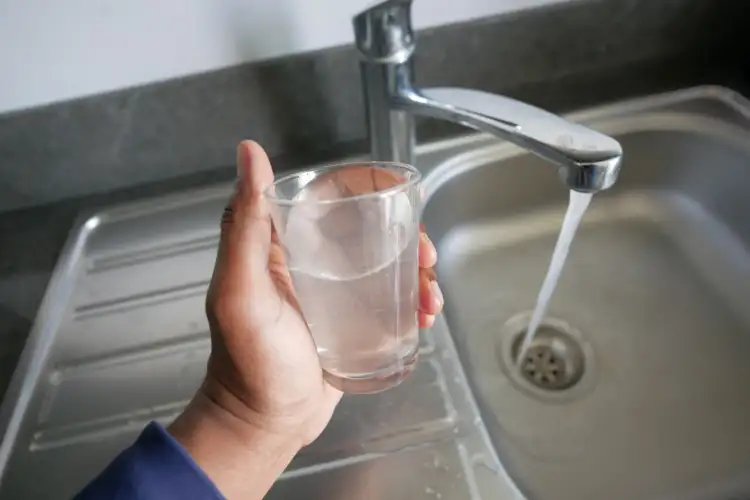 Why does my city water smell like rotten eggs is a question we hear less often, but it does happen. Municipal supplies are treated before distribution, so a persistent rotten egg smell coming from why does my tap water smell like rotten eggs on a city connection can point to sulfate reducing bacteria growing somewhere in the plumbing between the main line and your fixtures, rather than the treated water itself.
If your water comes from a municipal and city water supply, it is worth noting that sulfur is not the only odor complaint homeowners raise. A related but different issue is water that smells chlorine instead, which comes from disinfection rather than bacteria, and calls for a different fix entirely.
Why Does Only My Bathroom Sink Smell Like Rotten Eggs?
If a rotten egg smell in my water only shows up at one fixture, the cause is often localized rather than the whole house. Why does my bathroom sink water smell like rotten eggs, specifically often traced back to bacteria growing in the drain trap or overflow, not the water supply itself. A thorough cleaning of the drain is worth trying before assuming your water needs treatment.
If my sink water smells like rotten eggs happens at more than one fixture, or if the smell is present right when the water comes out rather than lingering in the drain, that is a stronger sign the issue is coming from your water itself. A water quality testing guide can help you figure out which situation you are dealing with before you spend money on the wrong fix.
How to Get Rid of Rotten Egg Smell in Water
Once you know where the smell is coming from, how to get rid of rotten egg smell in water usually comes down to one of a few proven approaches.
For a water heater related odor, flushing the tank and replacing the anode rod is often enough on its own. For source water issues, oxidation is typically the first step, whether that comes from chlorination, aeration, or an oxidizing filter media that converts hydrogen sulfide into a form that can be filtered out.
A properly sized home water filtration solution treats water at the point it enters your home, so the rotten egg water smell is addressed at every tap rather than just the ones you notice most. When iron and sulfur are both present, which is common across Georgia wells, a whole house iron filter paired with the right oxidation step is usually the most effective long term water filter to remove rotten egg smell.
Businesses Deal With This Too
Homeowners are not the only ones affected. Restaurants, hotels, and other commercial properties on well water or older municipal lines run into the same sulfur odor complaints, often at a larger scale. A commercial water filtration solution sized for higher water usage keeps guests and customers from noticing an issue that could otherwise affect their experience.
Talk to a Water Filtration Expert in Georgia
Metro Water Filter of the South has served homes and businesses across Georgia and the Southeast since 1972, and rotten egg odor is one of the most common calls we get. Rather than guessing at the cause, we start with a free professional water test to identify exactly what is happening in your water and recommend a system built for it. Rotten egg smell in water is unpleasant, but it does not have to be permanent, and getting to the bottom of it is usually simpler than homeowners expect.