
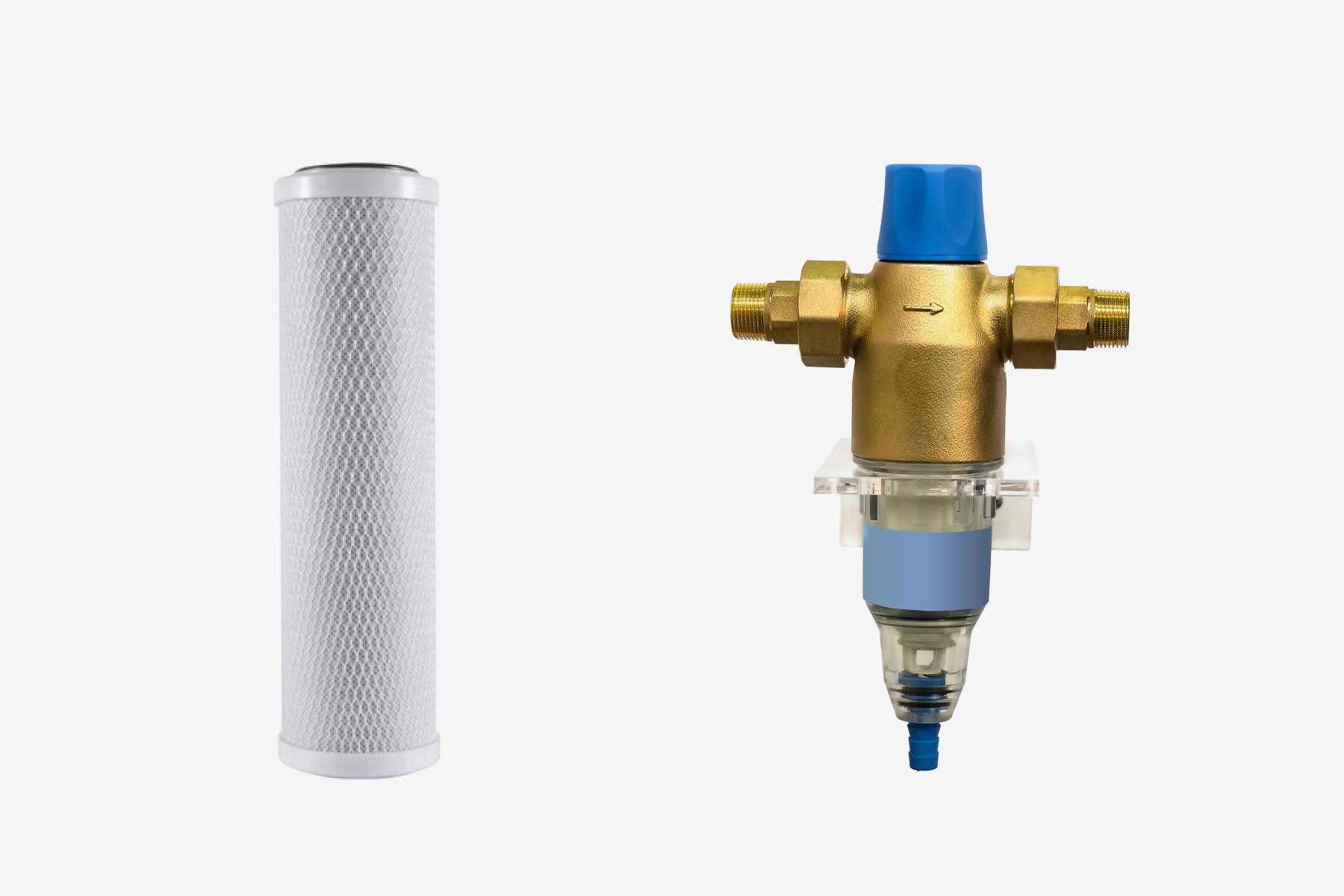

If your home runs on well water, sediment is one of the first problems you are likely to deal with. Sand, silt, rust, and other particles make their way into well water for a variety of reasons, and without a sediment filter for well water in place, those particles end up in your pipes, your appliances, and your drinking water. The question most well owners face is not whether they need a sediment water filter, but which type is the right fit for their situation. Cartridge and spin-down sediment filters are the two most common options, and they serve different purposes. Here is how to tell them apart and figure out which one belongs in your home.
What Is Sediment in Well Water and Why Does It Matter
Sediment in well water refers to any solid particles suspended in your water supply. This includes sand and grit that enters through the well casing, silt disturbed by changes in groundwater flow, rust particles from aging pipes, and fine organic material. Heavy rainfall and seasonal shifts in Georgia can stir up sediment levels significantly, making this a particularly relevant issue for well owners across the state. Left unaddressed, sediment causes wear on appliances, clogs fixtures, shortens the lifespan of other filtration equipment, and affects the clarity and taste of your water. Understanding what is in your water through well water testing is always the right starting point before selecting any filtration solution.
How a Spin-Down Sediment Filter Works
A spin-down sediment filter uses centrifugal force to separate particles from water as it flows through the housing. Water enters the filter and spins, pushing heavier particles to the outside wall where they collect at the bottom of the canister. Most spin-down filters include a flush valve that lets you drain the collected sediment without shutting off your water supply or replacing any components. This makes them a low-maintenance option for well owners dealing with higher volumes of coarse sediment like sand and grit. Spin-down sediment filters are durable, reusable, and well-suited as a first stage of filtration before water reaches other filters or appliances.
Best for:
- High sediment loads with coarse particles like sand and grit
- Situations where frequent filter changes would be inconvenient
- Use as a pre-filter protecting downstream filtration equipment
Limitations:
- Not effective for fine particles, with most spin-down filters only capturing particles down to around 100 microns
- Does not address chemical contaminants, bacteria, or other water quality issues
How a Cartridge Sediment Filter Works
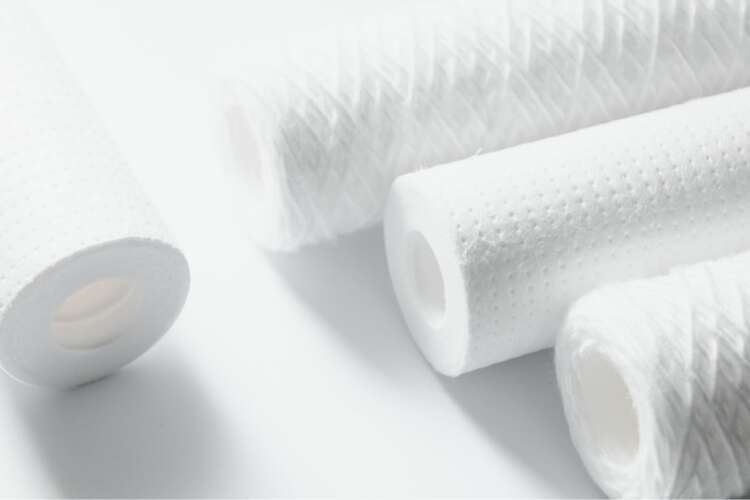 A cartridge sediment filter uses a replaceable filter element housed in a canister to trap particles as water passes through. Cartridge filters are available in a wide range of micron ratings, meaning they can be selected to capture very fine particles that a spin-down filter would miss entirely. A 5-micron or 1-micron cartridge filter, for example, will catch fine silt, sediment, and particulate matter that would pass straight through a spin-down unit. You can read more about how micron ratings affect filtration performance in our post on water sediment filters and filtration standards. The tradeoff is that cartridge filters require periodic replacement, and in high-sediment situations, cartridges can clog quickly if there is no pre-filtration in place.
Best for:
- Fine sediment, silt, and particulate matter
- Homes that need precise filtration down to specific micron levels
- Use as a secondary filter after a spin-down unit in high-sediment situations
Limitations:
- Cartridges require regular replacement
- High sediment loads can shorten cartridge life significantly without a pre-filter in place
Cartridge vs. Spin-Down: Which Sediment Filter for Well Water Is Right for You
The most important thing to understand is that these two filter types are not always competing options. In many well water situations, the best solution is both, used together in sequence. A spin-down sediment filter installed first removes the bulk of coarse particles, protecting the cartridge filter that follows and extending its useful life considerably. This combination approach is common in whole-house sediment filters for well water setups where sediment levels are significant and water quality demands are high. For homes dealing with lower sediment levels or finer particulate concerns, a cartridge filter on its own may be sufficient. The right answer depends on your specific water, which is why water sediment testing is the most reliable way to make that determination.
What Sediment Filters Do Not Address
It is worth being clear that sediment water filtration, whether cartridge or spin-down, only addresses physical particles in your water. Sediment filters do not remove bacteria, iron, manganese, hardness minerals, chemicals, or other dissolved contaminants. If your well water for drinking has additional quality concerns beyond sediment, you will need a multi-stage filtration approach. Iron and iron bacteria in well water are common companion issues in Georgia well water, and a filox filter is often the right solution for those specific problems alongside your sediment filtration. A complete home filtration systems solution addresses all of these issues in the right sequence.
Let a Water Filter Specialist Find the Right Fit for Your Well
Choosing the right sediment filter for well water is straightforward when you know what your water contains and how much sediment you are actually dealing with. Metro Water Filter of the South has been helping well water homeowners across Georgia and the Southeast find the right filtration solutions since 1972. Our water filter specialist team will test your water, assess your sediment levels, and recommend the right filter type and configuration for your home. If you are ready to get started, contact us for well water sediment testing and we will take it from there.